Materials & sleep
How Latex Layers Shape Mattress Feel: A Guide to Firmness and Support
A latex mattress is not a single, uniform block. It is a small landscape of materials and densities, stacked to influence how the body settles, where it meets resistance, and how easily it moves. Change the order or firmness of those layers, and the same mattress can feel remarkably different.
Understanding that construction offers a clearer way to compare latex mattresses—and a more useful way to think about comfort than searching for one universally “right” firmness. The details matter: how the layers are arranged, what kind of latex they contain, how thick each layer is, and how the mattress is supported beneath.
Firmness is a sensation; support is a job
People often use firmness and support as if they mean the same thing. They are related, but they describe different parts of the experience. Firmness is the initial impression of how resistant a surface feels when someone lies down. Support is how well the mattress helps keep the body in a comfortable, reasonably aligned position over time.
A mattress may feel plush at the surface yet still offer substantial support deeper down. Conversely, a surface that feels hard at first contact may not provide an appropriate fit if it fails to accommodate the shoulders, hips, or other pressure-sensitive areas. Comfort is not a contest in which the firmest mattress wins. The goal is a balance: enough give for the body to settle, with enough resistance to prevent excessive sinking.
That balance varies with body shape, weight, sleeping position, personal sensitivity, and even the way a person uses the bed. A side sleeper, for example, may notice pressure at the shoulder and hip more readily than a back sleeper. Someone sharing a bed may also weigh movement differently from a person sleeping alone. These differences help explain why mattress firmness is best understood as a personal fit rather than a universal scale.
Labels such as “soft,” “medium,” and “firm” can be useful shorthand, but they are not a complete description. A label does not tell you which layer creates the sensation, how thick that layer is, or what happens when the body presses farther into the mattress. Those answers begin with the construction.
Reading the mattress from the surface down
In a layered latex mattress, each section contributes to the feel of the whole. The uppermost layer is usually the first one the body encounters. It can influence how quickly the mattress responds and how much cushioning is noticeable at the shoulders, hips, and other contact points. A more yielding upper layer may soften the first impression; a firmer one can make the surface feel more immediately resistant.
Below it, one or more transition layers help connect that surface sensation to the deeper structure. Their firmness and thickness can determine how gradually the body meets resistance. If the transition is abrupt, someone may notice a distinct change as they sink farther into the mattress. If it is more gradual, the feel can seem more continuous.
The lower layers form the foundation of the arrangement. They help limit how far the sleeper sinks and provide the mattress’s deeper resistance. This does not mean the bottom layer alone determines support. The body loads the layers together, and the overall effect depends on the entire stack, its dimensions, and what lies beneath it.
Imagine pressing a hand into a layered surface. A soft top over a firmer base may feel inviting at first, then increasingly resistant as pressure deepens. A firm top over a similarly firm base may feel more even and solid from the beginning. Neither arrangement is automatically better. They simply create different responses, and each can suit different preferences.
Why layer order changes the experience
Layer order matters because the body encounters the mattress from top to bottom, while its weight is distributed across a changing pattern of contact points. A softer layer at the surface can allow a little more initial contouring before firmer material beneath begins to resist. Put that same layer deeper in the stack, and it may have less influence on the first impression, though it can still affect how the mattress responds under greater pressure.
Rearranging layers is therefore not simply a matter of making a mattress “softer” or “firmer.” It changes where in the mattress the body meets different levels of resistance. Two configurations made from the same pieces can feel distinct because the first layer, the transition, and the deeper support are doing different work in different positions.
Thickness is part of the equation. A thin comfort layer may offer a subtle change in surface feel, while a thicker one can have a more noticeable effect on how deeply the body settles before encountering the layers beneath. Yet thickness alone does not predict comfort: material firmness and the sleeper’s body shape also affect how much a layer compresses.
This is why a mattress specification should be read as a system rather than a list of isolated components. A useful comparison asks: What is the surface layer? How thick is it? What comes next? How does the full arrangement respond when a person lies in their usual position? The answers are more meaningful than a single firmness word.
Latex type and construction
“Latex” can describe material made through different processes. Natural latex is derived from the milky sap of rubber trees, while some products use synthetic latex or blends. A mattress’s label and manufacturer’s material information are important because the word alone does not establish the source, composition, or processing method.
Two common manufacturing methods are Dunlop and Talalay. These names describe production approaches, not simple rankings from best to worst. Broadly, the processes differ in how the latex mixture is prepared and cured. The resulting layers may differ in feel and structure, but the finished experience also depends on the specific product, its firmness, its dimensions, and its place in the mattress. It is unwise to assume that a method name, by itself, guarantees a particular comfort outcome.
When comparing options, look for clear descriptions of the latex in each layer. Ask whether the material is natural, synthetic, or blended; whether the stated firmness applies to a particular layer or the complete mattress; and whether the maker provides information about manufacturing and material standards. Certification language can help identify what has been tested, but it should be read as a defined claim—not as a general promise about every aspect of performance.
Feel descriptions are also best treated as starting points. One maker’s “medium” may not translate directly to another’s because firmness ratings can reflect different measurement systems, layer combinations, or subjective judgments. If possible, assess the complete mattress configuration rather than relying on the firmness rating of a single piece.
What customizable designs can teach us
Customizable layered mattresses make the relationship between construction and sensation easier to see. Savvy Rest is one example often associated with latex mattresses that use separate layers and offer configuration choices. Its relevance here is not that one arrangement is right for every sleeper; it is that a layered format makes the building blocks of mattress feel more visible.
With a customizable design, the questions shift from “Which mattress firmness should I buy?” to “What combination of layers might suit my body and habits?” A shopper can consider how much surface cushioning feels comfortable, whether a firmer transition is desirable, and how much resistance is needed underneath. Exact options vary by model, so the manufacturer’s current specifications should always be checked rather than assumed.
Customization can also make testing more informative. If a configuration feels too yielding, the useful observation is not merely “I dislike soft beds.” It may be that the hips sink more than feels comfortable, or that the surface needs more resistance. If the bed feels too hard, the issue may be insufficient pressure relief at a particular contact point rather than a need for the entire mattress to be softer.
Layered designs do not remove uncertainty. A showroom test is brief, and a night at home involves longer periods in a usual sleep position. Adjustable components may also require handling, careful placement, and attention to the maker’s instructions. A comfort exchange or adjustment policy, if offered, should be examined closely for timing, fees, and eligibility before a purchase. Customization is most useful when it is accompanied by clear guidance and realistic expectations.
Matching a configuration to sleep position
Sleep position is a practical starting point because it influences which parts of the body press most strongly into the mattress. It does not dictate a single firmness, but it can help identify what to pay attention to during a test.
- Side sleeping: Notice whether the shoulder and hip can settle without creating uncomfortable pressure. A surface with some give may be helpful, while deeper layers still need to prevent an excessive sense of sinking.
- Back sleeping: Consider whether the mattress feels even beneath the torso and pelvis. The key question is whether the body feels supported without a pronounced hollow or pressure point.
- Stomach sleeping: Pay attention to whether the midsection sinks in a way that feels uncomfortable. Some stomach sleepers prefer a more resistant surface, though individual body shape and preference remain important.
- Combination sleeping: If you change positions during the night, consider whether the mattress makes movement feel easy and whether its pressure relief remains comfortable in more than one posture.
These are observations, not medical rules. Persistent pain or sleep difficulties may have causes beyond a mattress, and a change in bedding is not a substitute for professional advice where needed. The purpose of a position-based check is to make a comfort trial more deliberate: notice how the whole body feels, not simply how the mattress feels beneath one hand.
Pressure relief, movement, and temperature
Layer construction affects more than the initial firmness impression. Pressure relief describes how the mattress distributes contact across the body. A layer that conforms more readily may reduce concentrated pressure for some sleepers, but too much sinking can feel restrictive or make repositioning less comfortable. The preferred balance depends on the sleeper and on how the layers work together.
Movement is another part of the experience. Latex is commonly noted for its responsive feel: when pressure is removed, the material tends to recover rather than retaining a deep impression for long. How noticeable that response feels depends on the formulation, firmness, and construction. People who share a bed may want to observe how movement on one side is experienced on the other; a material’s reputation does not replace testing the complete mattress.
Temperature comfort is influenced by the bedroom environment, bedding, mattress cover, and sleeper as well as the mattress core. Layer thickness and the materials surrounding latex can affect the overall sleep experience, but no material guarantees that every person will sleep cool. Consider the full assembly, including the cover and the sheets, and be wary of broad claims that treat one component as the sole answer to temperature discomfort.
The foundation beneath the layers
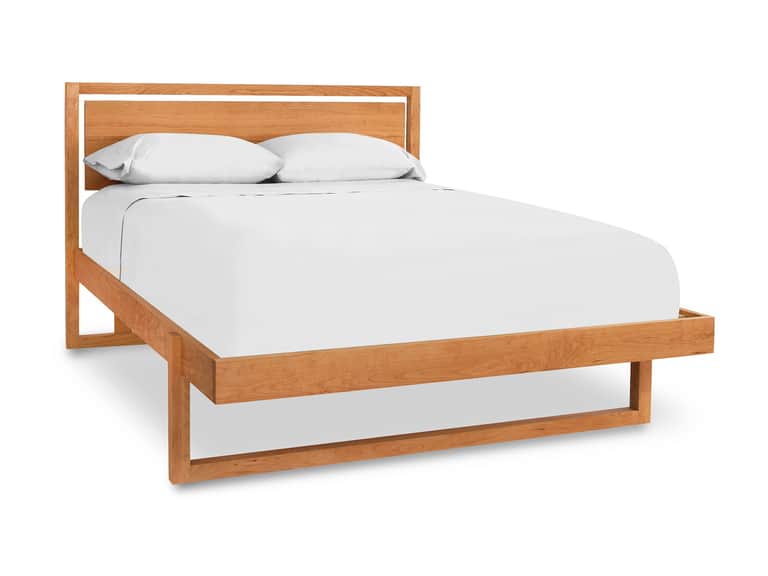
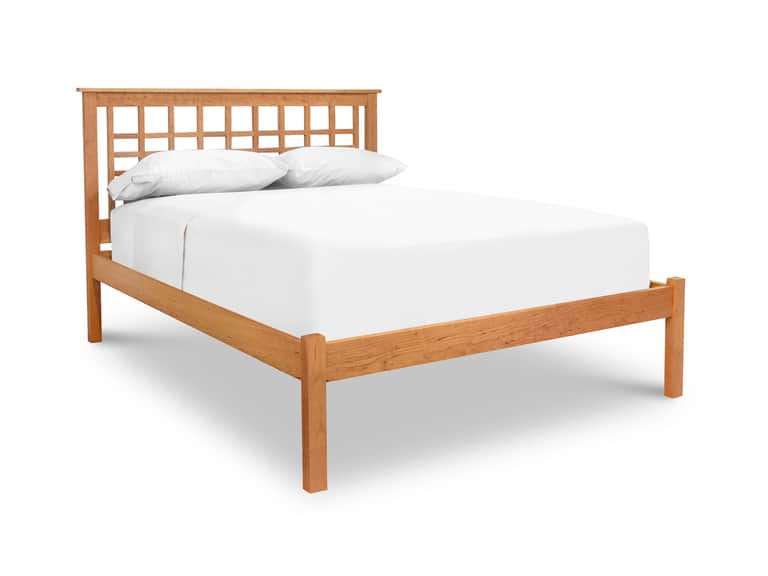
A mattress does not work in isolation. Its foundation or bed frame can influence stability, ventilation, and how evenly the mattress is supported. A base that is unsuitable for the mattress may change how it feels or contribute to uneven wear. Before choosing a latex mattress, check the maker’s requirements for support spacing, foundation type, and compatibility with adjustable bases, if relevant.
For a slatted frame, ask about the permitted distance between slats and whether center support is required for the mattress size. These details can vary between products. A well-built wooden bed may provide a sturdy setting, but the material or appearance of a frame does not, by itself, confirm that its support pattern is appropriate. Follow the mattress manufacturer’s directions.
Also consider practical matters such as mattress weight, the method for moving or turning layers, and access to the bed through doorways and staircases. Latex layers can be substantial to handle, and a configuration that can be adjusted in theory may be less convenient if moving the pieces is difficult. Construction choices have consequences not only for sleep but also for setup and care.
A careful way to compare mattresses
When comparing latex mattresses, take a structured approach. Start by writing down the qualities that matter most: pressure relief, a more buoyant or more cushioned feel, ease of movement, temperature comfort, or a particular foundation requirement. Then compare the actual layer details rather than relying on marketing names.
- Identify the material. Find out whether the latex is natural, synthetic, or blended, and note what is used in each layer.
- Map the stack. Record the order and thickness of the layers, along with any firmness information provided for each one.
- Check the complete design. Ask how the cover, quilting, and foundation affect the finished mattress and whether the setup has specific support requirements.
- Test in your usual positions. Spend enough time on your side, back, or stomach to notice pressure, sinking, and ease of movement.
- Read the policies. Review trial periods, adjustment options, return conditions, and care instructions before making a decision.
If you test more than one configuration, change one variable at a time where possible. Otherwise, it becomes hard to tell whether a different sensation came from the top layer, the layer beneath it, or a broader change in the stack. A short written record can help: note the configuration, sleep position, and what felt different. Avoid treating one brief impression as a final verdict, especially when the mattress has not yet been used in the home environment.
Care and long-term expectations
Care guidance depends on the mattress design. Some layered models allow the pieces to be rearranged or rotated; others have specific limits. Follow the instructions for the exact product, including guidance about covers, cleaning, moisture, and whether any component should be turned or repositioned. Do not assume that every latex layer is meant to be washed or handled in the same way.
Use a suitable, supportive foundation and protect the mattress from avoidable spills or prolonged moisture. If the cover is removable, check its care label before laundering it; a removable cover is not necessarily machine washable. Good maintenance protects the materials, but it cannot eliminate normal changes that may occur with use.
It is also helpful to separate an adjustment period from a construction problem. New materials may feel unfamiliar, and a sleeper may need time to understand whether a configuration suits them. At the same time, discomfort should not be dismissed automatically as something that must be endured. Keep track of what you notice, consult the maker’s adjustment guidance, and use any available trial terms within their stated limits.
Common misconceptions about latex layers
- “Firmer always means more supportive.” Firmness is a surface impression; support is about how the complete mattress holds the body. A very hard feel is not automatically a better fit.
- “One latex process is always superior.” Production methods describe how material is made. The best choice depends on the finished layer and how it performs in the whole mattress.
- “The top layer tells the whole story.” The upper layer shapes first contact, but deeper layers influence how far the body settles and how resistance builds.
- “A firmness label is universal.” Terms such as medium or firm are not necessarily standardized across manufacturers and models.
- “Customizable means effortless.” Adjustable layers can offer flexibility, but configuration takes thought, and moving or changing layers may require physical effort.
Choosing for the person, not the label
The most useful lesson in a layered latex mattress is that comfort is built from relationships. The top layer sets the first encounter; the layers below shape the path from cushioning to resistance; and the foundation supports the structure as a whole. Material type, layer order, thickness, and firmness each contribute, but none works alone.
That is why a customizable design such as those associated with Savvy Rest can serve as a helpful reference point for understanding mattress construction. It invites closer attention to the arrangement rather than to a single firmness category. The same approach can be used with any mattress: examine the materials, ask how the layers interact, and consider how the design feels in the positions you actually sleep in.
There is no universal configuration hidden beneath the labels. There is only the task of finding a balance that suits a particular body, bedroom, and set of preferences. When readers learn to look beneath the surface—at the stack, the support, and the spaces between layers—they can make comparisons with greater clarity and less reliance on guesswork.